


Two hundred and fifty years into the American experiment in self-governance, and it’s been making me think about how parents structure our much smaller (but no less important) home nation. The Founding Fathers were not arguing for a life without rules. They were arguing that distant powers should not get to write the rules for people who had to live under them.
That feels less abstract once you have a three-year-old and a house full of software.
The modern family lives inside systems we didn’t necessarily vote for: feeds, app stores, device defaults, and AI-powered assistants that regress to the mean.
This Independence Day, take twenty minutes to make your house less programmable by strangers and more aligned with the family legacy you want.
Defaults don’t have your interests in mind
We used to let our son watch Cocomelon. After discovering that it’s engineered by experts to zombify your kids and turn them into revenue streams, I started wondering what other “default” settings parents accept as normal without considering whether they’re useful, or at the very least not harmful, for their kids.
Software is made by people (or companies). People who want things (usually including more money), people who get tired, people who have crazy ideas that they think are awesome, people who make mistakes even when they try their best. Software can become so pervasive that it fades into the background, a ubiquitous and unquestioned part of your kid’s day. Questioning it takes more mental effort, after all, and parents are tired people. Agency is a Sisyphean stone.

So set new defaults
Independence in a technical age means refusing to let defaults be destiny. Software is imperfect, just like people (and companies). Settings can and usually should be changed to fit your family’s values. Tools should be questioned. Systems can be rebuilt or replaced to better serve you. Tailor things in the way you want, and you’ve set new defaults for your family that run on autopilot.
Some examples:
Autoplay
We used to have VCRs, you know. You’d choose a video (usually after a big battle to decide who gets to pick tonight), plop it in, and watch it–attentive, as a family, maybe with a big bucket of popcorn. And when it was over, it was over. Video time done. On to dinner, or bath, or bed (if the youngest wasn’t already asleep).
Autoplay hijacks this family routine, removing all friction from 24/7 video streams with recommendation-engine-driven shorts that you’re sure to like. If that doesn’t align with your goals, toggle it off.

Notifications
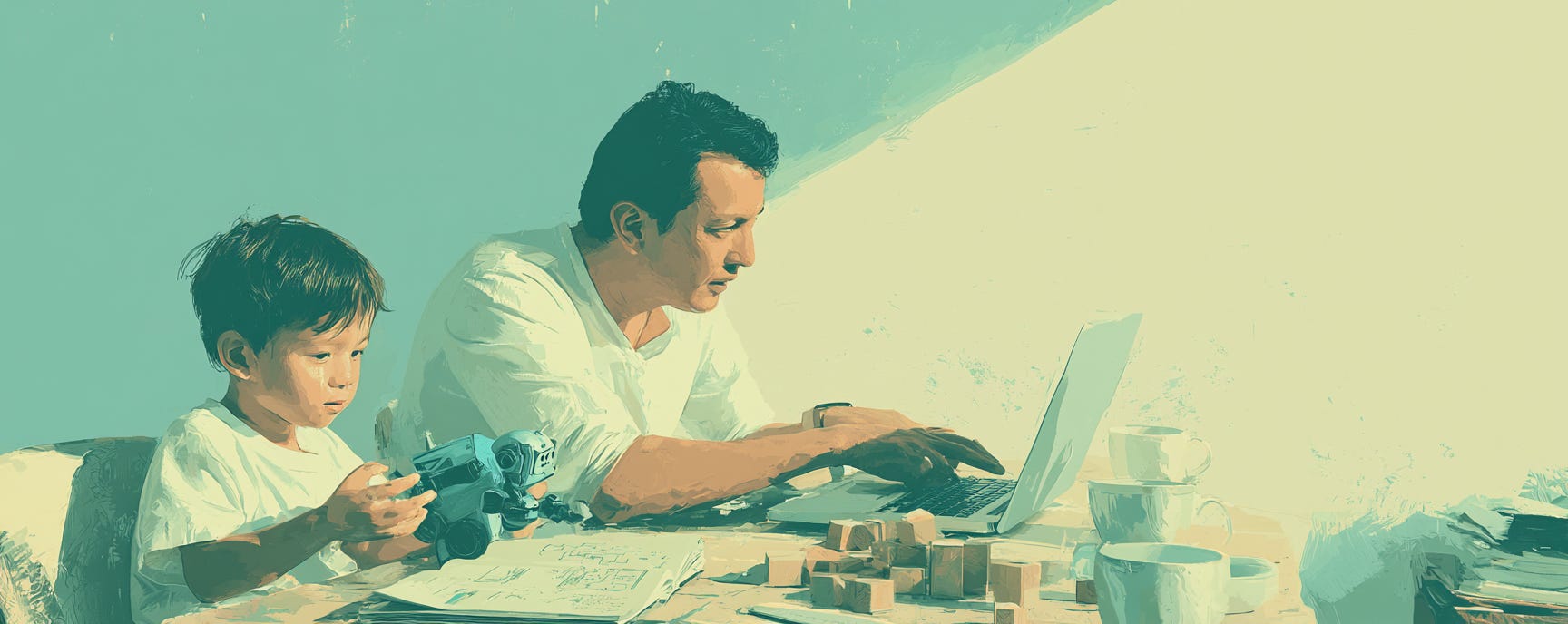
Phone goes ding, you’ve got mail. You pause from building block towers and pull out the glass rectangle for a quick check. Twenty minutes later you’re scrolling, 3yo has started destroying the living room in protest of the lack of attention, and you wonder why you can’t get a moment’s peace. And by “you” I mean “me, last week.”
Now, two things make a phone go “ding” around here: a call or message from a family member (and they usually want to talk to the 3yo).
“Learning” apps
I’ve yammered lots about how not all screen time is equal, and I’m still on that hill. Even within the category of educational screen time, some options may be more or less aligned with how you want your kid to be raised.
We installed Khan Academy, and for months put up with being tortured by that annoying bird voice and dopamine short-circuiting pace because it was helping our son with math, and also the app is free. As far as apps go we said, “It’s the least worst option.” But actually, you can have it all, and now I’m making custom, calm Threejs games that teach my 3yo the same concepts sans the high-pitched grating bird voice. You can just do things.
AI relationships
Researchers at the Children’s Hospital of Philadelphia (CHOP) warn that generative AI is a tool, not a companion, and that young children may struggle to distinguish AI interaction from human interaction. The default AI companion is frictionless: always instantly available, endlessly patient, agreeable to the point of being a sycophant. It never asks for a turn, never gets bored, rarely says no.
Real friendships have latency, disagreements, misunderstandings–they require actual social skills to navigate. Defaulting to AI relationships doesn’t teach any of these, and encourages an incorrect mental model of relationships and the real work they require.
AI chat apps can be adjusted for enthusiasm and agreeableness, but the real settings override is maintaining a parental filter between kids and AI .

Govern closer to home
I don’t want to spend my kid’s childhood yelling, “turn that off.” Just like how the house tells my kid it’s time for bed , I want to build an environment that makes the best default choice easy.
You can stop fighting battles downstream by changing the system upstream. The household version of self-governance is rules written by the people who have to live with their consequences (parents).
Established norms aren’t exempt from examination or change. Systems have authors.
This Independence Day, pick one default and rewrite it. Turn off autoplay, silence one category of notifications, replace one noisy “educational” app with something calmer. Consider whether AI is a relationship or a tool in your child’s eyes. Let your kid see you change the settings and discuss why; the deeper lesson is not the setting itself, but that the toggles exist.
Declare your independence from defaults that don’t serve your home.